How to Compare Solar Quotes in Malaysia
A practical way to compare scope, assumptions and after-sales support—not just the final price.
Quick links
Solar quotes can look similar while covering very different systems, paperwork and support. A useful comparison starts by putting every quote on the same basis: the system size, equipment, installation scope, approvals, warranty and payment terms.
Start by making the quotes comparable
A 6 kWp system is not directly comparable with a 6 kW inverter, and neither tells you everything about the design. Ask each provider to state the DC panel capacity, inverter capacity and the number and wattage of panels. It should also be clear whether the quoted output is an estimate and what assumptions sit behind it.
Put the same fields from each quote into one simple comparison sheet. This makes scope gaps visible before price becomes the deciding factor.
| Check | What to compare | Why it matters |
|---|---|---|
| System design | Panel count, panel wattage, DC capacity and inverter capacity | Confirms you are pricing equivalent equipment and capacity. |
| Expected output | Annual generation estimate and key assumptions | Helps you understand the basis of any savings illustration. |
| Scope | Roof works, electrical works, approvals, testing and commissioning | Shows whether later charges are likely. |
| Support | Workmanship warranty, monitoring, maintenance and fault-response process | Clarifies what happens after installation. |
Read the equipment list, not just the brand names
A quote should identify the panel and inverter models, not merely say “Tier 1 panels” or “premium inverter”. Ask for model numbers, product warranty terms and performance warranty terms. Mounting, protection equipment, cabling and monitoring hardware should be visible too.
If the roof has shade, multiple roof faces or limited space, ask how the design responds to those conditions. A sound answer explains the trade-off rather than promising identical output from every roof.
Check what is included and excluded
The best quote is clear about the work included from survey through commissioning. It should identify whether the provider handles the relevant application and utility process, and whether special roof, electrical or access work could attract extra cost.
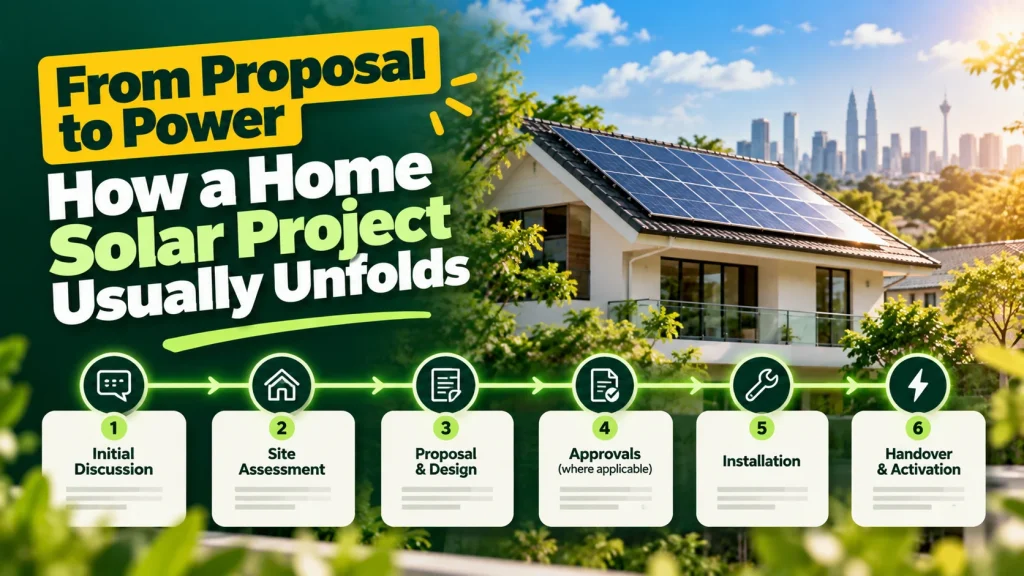
- Ask whether site survey, design, installation, testing and handover are included.
- Ask what happens if roof repairs, ceiling access, switchboard upgrades or unusual cable routing are needed.
- Ask whether the price includes required applications and who remains responsible for each submission.
- Ask for exclusions in writing rather than relying on a verbal explanation.
Compare warranties by type and by provider
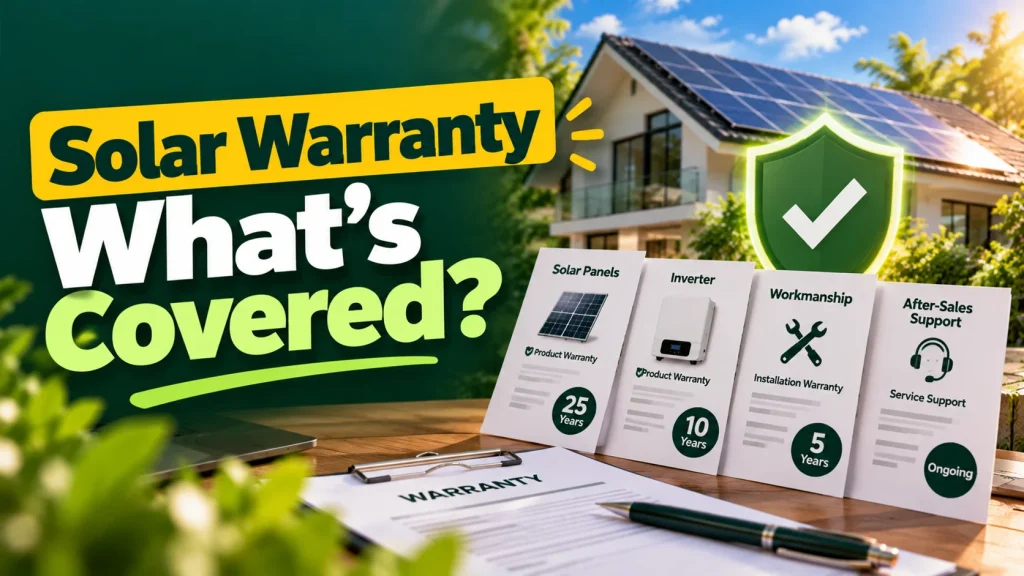
“A long warranty” is not one promise. Panels, inverters, workmanship and optional service plans can have different terms, claim processes and exclusions. Compare the duration, who provides it, what is covered and what the homeowner must do to keep it valid.
Review payment and contract terms before signing
Look at the payment milestones alongside the project stages. They should make sense for the work being completed and should be clear about what happens if site conditions change. Do not rely on an output or savings figure without understanding the electricity-use, tariff and weather assumptions behind it.
For grid-connected residential solar, programme requirements can change. Confirm that the provider’s explanation matches the current guidance and that your home is eligible before treating an illustration as a commitment.
The bottom line
A lower price can be good value, but only after you know what it includes. Choose the quote that makes the system, scope, risks and support easiest to understand—and gives you a documented answer when something is not included.
Sources
- SEDA Malaysia: Home owners’ guide for solar PV
- SEDA Malaysia: NEM 3.0 guidance
- Verdant Solar residential proposal, version 10.