
Residential Solar Timeline in Malaysia
What normally happens from your first solar proposal to a commissioned rooftop system—and which steps can move the date.
Quick links
A residential solar project has a few distinct stages: assessment, proposal, approvals where applicable, installation, meter-related activity and handover. The order is predictable, but the calendar is not always fixed. The best timeline is one that explains both the expected steps and who controls them.
1. Assessment, proposal and confirmation
The project starts with an assessment of your roof, electricity use and electrical setup. You then receive a proposal showing the proposed system, scope, price and terms. This is the point to clarify equipment, exclusions, warranties and any documents you will need to provide.
A complete decision at this stage helps prevent avoidable changes later. If roof repairs, access constraints or electrical work are likely, ask how they will affect the plan.
2. Application and approval stage
Where a grid-connected application is applicable, the provider prepares and submits the required information. Verdant’s current indicative allowance for this stage is approximately 10–60 days. The actual timing depends on the application details and the relevant external process.
SEDA’s current NEM guidance says that, after NEM approval, installation should commence within three months. Programme rules can change, so eligibility and current requirements should be confirmed for the individual home.
3. Installation and commissioning
For standard systems, Verdant currently guarantees installation within 30 days after approval and 70% payment, whichever happens later. Installation includes the agreed roof and electrical work, followed by testing and commissioning in line with the project scope.
4. Meter work and system activation
For the applicable grid-connected process, TNB meter work is currently estimated at approximately 2–6 weeks. This activity is outside Verdant’s control, so it should be treated as an estimate rather than a promise. Your project team should explain what has been completed, what is pending and when the system is ready for normal operation.
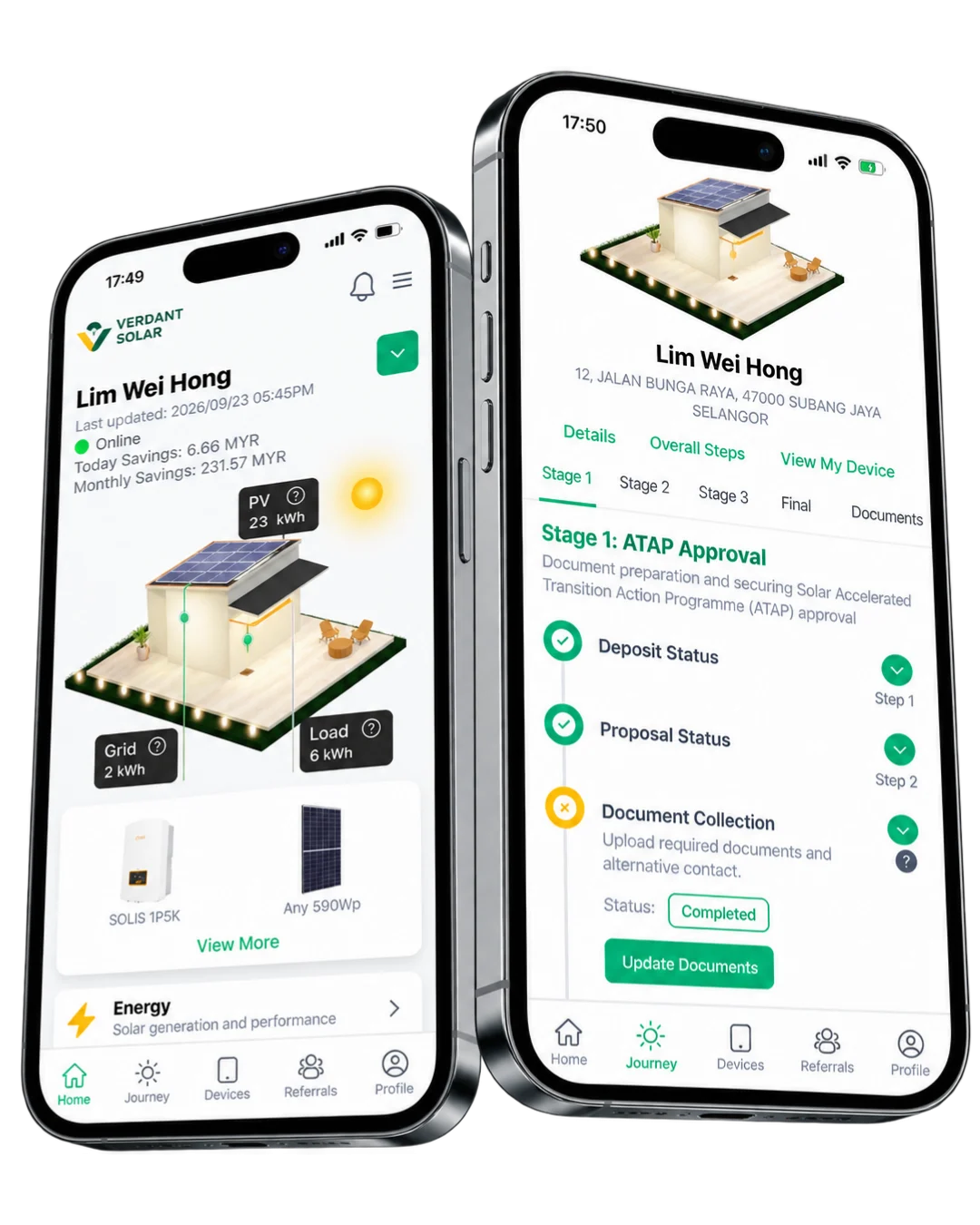
Indicative project sequence
| Stage | Current guide | What can affect it |
|---|---|---|
| Proposal and confirmation | Varies by site and decision time | Site information, equipment choice and contract questions. |
| Applicable application | Approximately 10–60 days | Documents, submission details and external processing. |
| Verdant installation | Within 30 days for standard systems after approval and 70% payment, whichever is later | Project scope and contract milestones. |
| TNB meter work | Approximately 2–6 weeks | Utility scheduling; outside Verdant’s control. |
How to keep your project moving
- Provide requested documents promptly and check names and account details carefully.
- Resolve roof, access or electrical questions before the installation date.
- Keep payment milestones and their effect on timing clear.
- Ask for updates by project stage, rather than relying on one overall completion date.
The bottom line
Solar timing is easiest to understand when each stage has an owner and a condition. Your installer can control design and installation work; approval and utility activity can add time. A clear project update should tell you which stage you are in and what happens next.
Sources
- Verdant Solar approved customer timeline fact check, provided September 2026.
- Verdant Solar residential proposal, version 10.
- SEDA Malaysia: NEM 3.0 guidance