Solar for Factories With Large Installation Areas
Size the system around electricity use, not available space alone
Quick links
A large installation area can make a bigger solar system possible, but possibility is not the same as a worthwhile investment. If the factory cannot use much of the additional output directly, filling the area may deliver less value than expected. The decision is how much capacity suits your electricity use, connection requirements and budget, not simply how many panels will fit.
Start with the electricity the business can use
The reason for considering solar helps determine how much of the area to use. A business seeking to supply a steady daytime load may favour a different size from one preparing for a confirmed expansion or working within a fixed capital budget. Establishing that priority first makes the later capacity comparison relevant to the investment you want to approve.
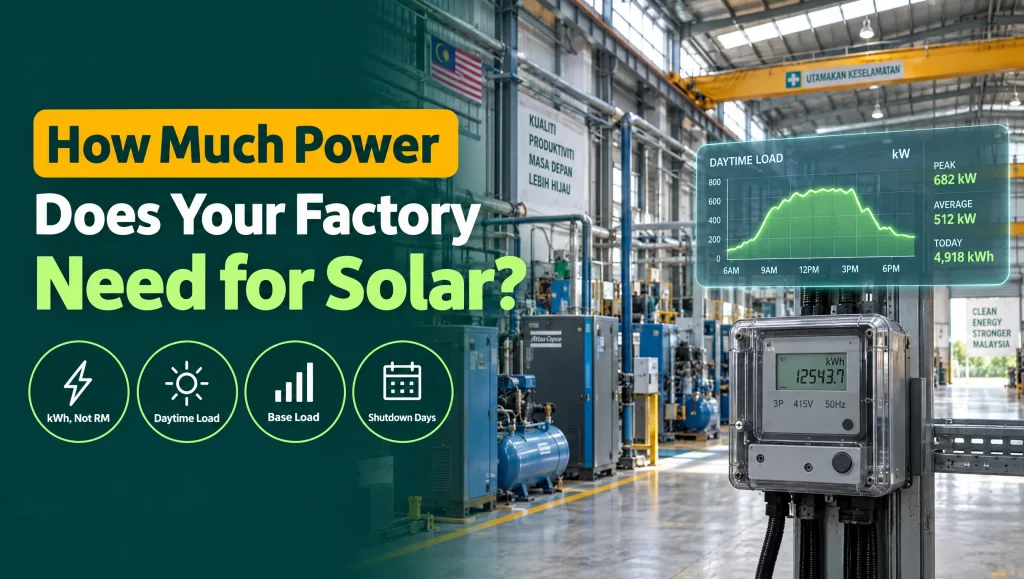
A warehouse with limited daytime equipment may need less solar capacity than a manufacturing plant of the same size. Their floor areas can be similar while their daytime electricity use differs substantially.
Use your bills and shift hours to narrow down the options. Ask the provider to show how much generation each proposed size can supply to the factory directly. Do not use available space as the only reason to buy more capacity.
Check how output differs across the available area
A large area is rarely uniform from a generation perspective: orientation, shade and nearby obstructions can make some sections more productive than others. That affects whether the additional panels deliver enough output to justify their cost. Comparing areas by expected contribution is more informative than assuming every available section is equally valuable.
Ask for a layout identifying the proposed panel areas and expected output from each. If a section receives more shade, check how that affects its generation and whether including it still justifies the additional cost.
Panels facing different directions can generate at different times of day. Ask how that affects your factory’s direct use and annual savings. A layout with lower total output may still warrant comparison if more of that output can be used on site; the calculation should show whether the difference is worthwhile.
Keep DC capacity, AC capacity and energy separate
When larger options are compared, capacity labels need care because they describe different parts of the system. Kilowatt-peak refers to the panels’ rated DC capacity, inverter capacity describes AC power, and kilowatt-hours measure electricity generated over time. A high panel-capacity figure alone does not tell you how much usable electricity the complete system is expected to deliver.
For a larger project, those distinctions become important to both technical review and financial comparison. Two proposals can advertise the same panel capacity while using different inverter capacity and assumptions about clipping or losses.
Compare panel capacity and inverter capacity separately, then check expected generation, electricity used directly and surplus value. Two systems with the same panel count can have different output and costs. Ask the provider to explain those differences.
Check connection limits before choosing capacity
Usable area is only one limit on a larger installation. The electricity connection and applicable programme also determine what capacity can be connected and how surplus can be treated. Confirming those requirements before settling on a size prevents an early layout from being mistaken for an approved project.
For a TNB-connected factory, the proposal should distinguish Solar ATAP from a non-export self-consumption arrangement. Larger installations may require additional studies or approvals depending on the route, connection and capacity.
Keep these requirements in the project budget and schedule. A preliminary layout is not authority approval. Ask which studies are required, who submits them and what happens if the assessment supports a different capacity from the initial concept.
Check whether additional panels justify their cost
The return from additional panels can differ from the return on the first part of the system. Early capacity may serve demand that runs reliably through the day, while further capacity increasingly produces electricity during lower-use hours. For that reason, the larger option needs to justify its extra cost through its extra benefit, not just a lower average price per kilowatt.
Compare a smaller system with a larger one using the same factory records. For the larger option, show the extra purchase cost, annual generation, electricity used directly and surplus. This lets you assess the additional panels rather than rely on the average return for the whole system.
For example, a larger system could add 100,000 kWh of annual generation while only a small part is used directly. Calculate the value of that direct use and any eligible surplus separately. Then compare the total with the extra investment. A lower price per kilowatt does not answer that question.
Consider phased development carefully
Using part of the area now and expanding later may suit a business whose production is expected to grow. It also changes the cost and delivery plan: a later stage may need another application, additional design or a return of the installation team. Considering that sequence early helps distinguish a planned expansion from simply postponing unresolved decisions.
Explain when the business realistically expects to expand. Ask which parts of the initial installation can support the future phase and which would need replacement or further approval.
Assess the first stage using current costs, programme terms and financing. Treat a later expansion as a separate plan, with the expected timing and approvals listed. Equipment availability and conditions may change before the second stage proceeds.
Build service access into the business plan
A larger system has more equipment to monitor and maintain. The proposal should identify responsibility for monitoring, planned servicing, corrective work and the equipment records needed for future support.
Discuss how servicing fits around factory operations. A visit requiring access equipment, permits or production coordination can have a different cost from a simple inspection. These arrangements belong in the operating budget.
Verdant Solar’s commercial materials describe monitoring, electrical checks and inverter maintenance. Ask which activities are included in your offer, which cost extra and how visits will be arranged. Panel cleaning alone does not cover all the servicing a larger installation may need.
Recalculate savings if production falls
A larger system commits more money to the expectation that the factory will keep using its output. If fewer shifts or a paused line are realistic possibilities, the financial comparison needs to show the effect before that commitment is made. Recalculating savings under those conditions reveals whether the extra capacity still meets management’s investment requirements.
The comparison should use the same proposed equipment while changing relevant demand assumptions. This helps management see whether the project remains acceptable when direct consumption falls.
Show electricity savings separately from tax benefits, assumed tariff increases and export value. If the larger system needs a future production increase to justify its cost, state when that increase is expected and calculate what happens if it is delayed.
Ask Verdant Solar to compare system sizes
Ask Verdant Solar to compare capacities using the same equipment scope, application requirements and payment terms. Its commercial proposal includes financial projections that can show how each option performs under your factory’s expected electricity use.
The recommendation should state why the selected size suits your demand and budget. If using only part of the area now gives a better return or leaves room for a confirmed expansion, ask the team to explain that in the proposal.
Record why you selected the capacity
When management chooses an option, record why that capacity was preferred over the alternatives. The explanation might be stronger direct use, a better capital fit or alignment with a confirmed expansion. Keep the rejected options and their main assumptions with the approved proposal.
Keep this explanation for future expansion discussions. If electricity use increases, you can reassess the unused area using current equipment costs and programme conditions. The original decision may have been correct for the factory’s earlier demand without being the best size for its later needs.