
Blogs

Date: 26/01/2023
Category: Solar Industries

Renewable Energy Scheme in Malaysia

Renewable Energy Resources

Malaysia is seen as being more than serious about increasing electricity generation from renewable energy resources. This was especially seen when our government introduced the Feed-in Tariff (FIT) scheme under the Renewable Energy Act in 2011. 


Under this scheme, commercial and residential electricity customers can generate electricity from renewable energy, like solar energy, and sell all the generated energy to Tenaga Nasional Berhad (TNB), the sole electricity utility in Malaysia. However, due to the high cost of funding such a scheme, the FIT scheme is not long-term sustainable. Because of that, in 2016, the government introduced net energy metering (NEM), named NEM 2016.


According to research papers, unlike FIT, where the customers are paid for the gross renewable energy generated from PV, NEM only considers the net energy generated. The customer will be paid based on the displaced cost per kWh unit. 


Unfortunately, NEM 2016 did not receive the target response from electricity customers in Malaysia due to unappealing financial returns. The displaced cost for a RE connection point less than 1 kV is RM 0.31/kWh. This rate does not benefit large consumers since they are paying a higher electricity tariff. To overcome the problem, our government introduced a new NEM scheme in 2019 by setting the pay rate at the retail rate per kWh of energy exported to the grid.
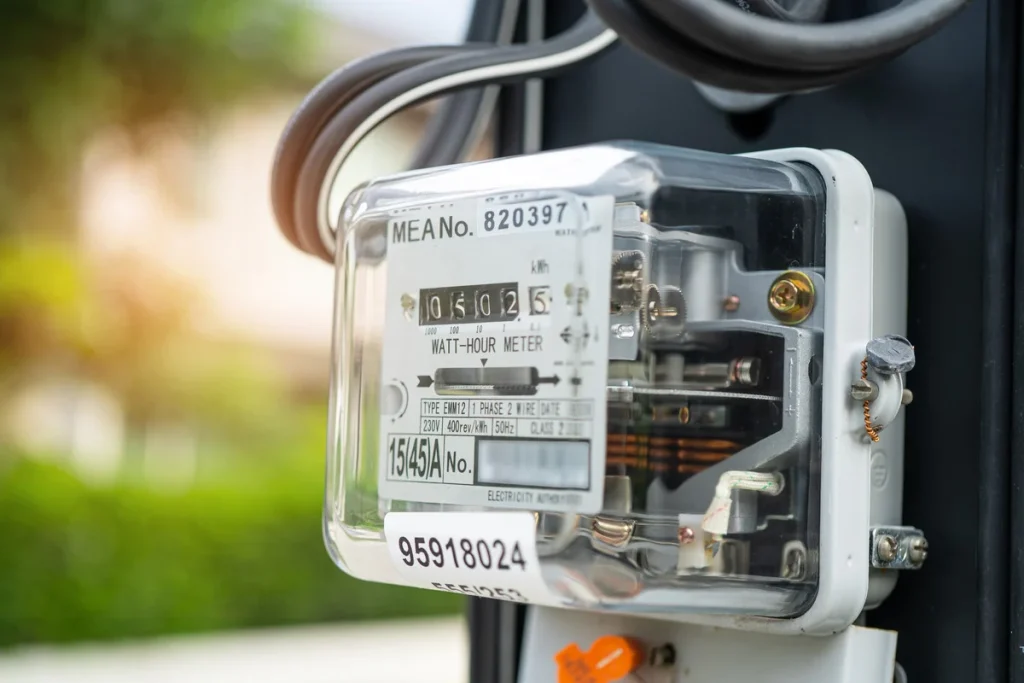
Net Energy Meter

Based on case studies, this policy has a better financial return than NEM 2016. For commercial and industrial systems, the maximum capacity of the PV system installed is 1 MW, or 75% of the maximum demand (MD) of their existing installation, or 60% of the fuse rating of the transformer.


For domestic or residential consumers, the maximum capacity of the PV systems installed is less than or equal to 12 kW for a single-phase system or 72 kW for a three-phase system. As mentioned before, NEM 3.0 consists of three programs, each of which is assigned to a specific market sector. NEM Rakyat (households), NEM NOVA (industrial), and NEM GoMEn (government ministries and entities).

The first programme, NEM Rakyat, covers the residential segment. A 100-MW capacity is allocated to this programme, effective February 1, 2021. The programme applies the one-to-one NEM 3.0 policy for 10 years. The allowed maximum PV installation capacity for the domestic consumer is 4 and 10 kW for single-phase and three-phase NEM consumers, respectively. This programme benefits people a great deal. Plus, it is so vital for the environment today, especially since we are facing global warming issues.


Let’s apply to NEM 3.0 before it runs out of quota! Read here to understand why NEM 3.0 is running out of quota. 
Share on:

Related Posts

30/01/2026

|

About Verdant, Blogs, Events
2100 Trees and Growing: Verdant Solar’s Ongoing Tree Planting Journey​

2100 Trees and Growing: Verdant Solar’s Ongoing Tree Planting Journey At Verdant Solar, sustainability is

13/12/2025

|

About Verdant, Blogs, Tips and Advice
How Does Solar PV System Work in Malaysia

How Does Solar PV System Work in Malaysia Most afternoons in Malaysia, the sun does

12/12/2025

|

About Verdant, Blogs, Tips and Advice
Comprehensive Guide Towards Solar Panel Installation Service in Malaysia

Comprehensive Guide Towards Solar Panel Installation Service in Malaysia Open your latest TNB bill and

24/10/2025

|

Blogs, Culture, Events
5 Years Milestone, 3 Weeks Paid Break: Mei Ching’s Story

5 Years Milestone, 3 weeks paid break: Mei Ching’s story One remarkable journey of growth,

Role Summary

The Assistant Manager (Sales) is a critical leadership role responsible for driving revenue through hands-on closing and structured team development. Success in this role requires a “Lead by Example” approach—first demonstrating elite closing ability, then translating that expertise into scalable training, playbooks, and coaching interventions. The AM remains personally accountable for high-impact strategic deals while ensuring the team adopts disciplined sales cadences and conversion strategies.


Key Accountabilities

  • Strategic Sales Leadership: Analyze lost deals and conversion gaps to drive pipeline strategy, specifically focusing on late-stage opportunities for immediate revenue impact.
  • Elite Personal Execution: Personally handle and close high-value, complex, or strategic deals (HNW clients) while maintaining an active personal pipeline.
  • Capability Building & Coaching: Design and implement structured sales training programs, including objection handling, closing simulations, and real-deal coaching clinics.
  • System & Playbook Development: Build and refine sales playbooks and Standard Operating Procedures (SOPs) to translate personal success into repeatable team-wide capability.
  • Performance & Accountability: Implement visible scoreboards and conduct regular performance reviews to improve key metrics like NOC per Consultant and Conversion Rates.
  • Cross-Functional Alignment: Collaborate with Marketing on lead quality and referral systems, and with Project/O&M teams to ensure delivery confidence during the sales process.

Requirements

  • 5-8 years in sales, preferably in high-ticket or consultative environments (e.g., Solar, Property, Wealth).
  • Proven track record of high-performance closing and objection handling.
  • Experience in leading or coaching a sales team to improve performance.
  • System improvement experience, such as building sales scripts, playbooks, or conversion strategies.