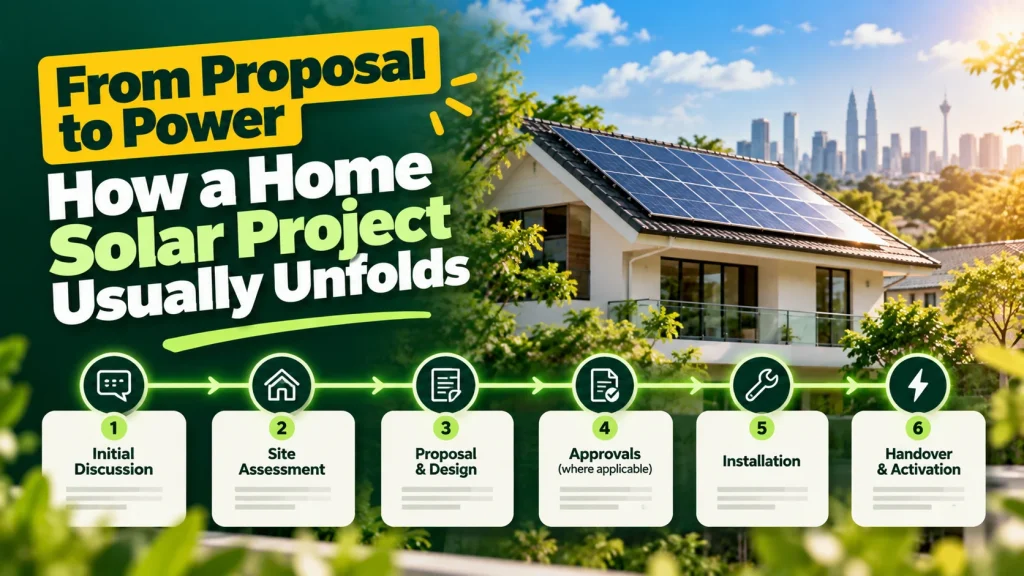
How is Solar Energy In Malaysia - 4 Things You Should Know About
How much do you understand about solar energy in Malaysia? Most of you know that solar energy begins with the sun. Solar panels are also known as “PV panels,” and they are used to convert light energy from the sun to electrical energy. Read here to learn more about how solar energy is produced!
So how is solar energy in Malaysia?
The development of solar technology actually dates back more than 100 years. Edmund Becquerel discovered the “photovoltaic effect,” which would allow the conversion of sunlight into solar electric energy. His discovery led to the invention of a genuine solar cell by Charles Fritts. This sparked a series of technological advances, including selenium-gold panels, slick silicon solar PV panels, and what we have today.
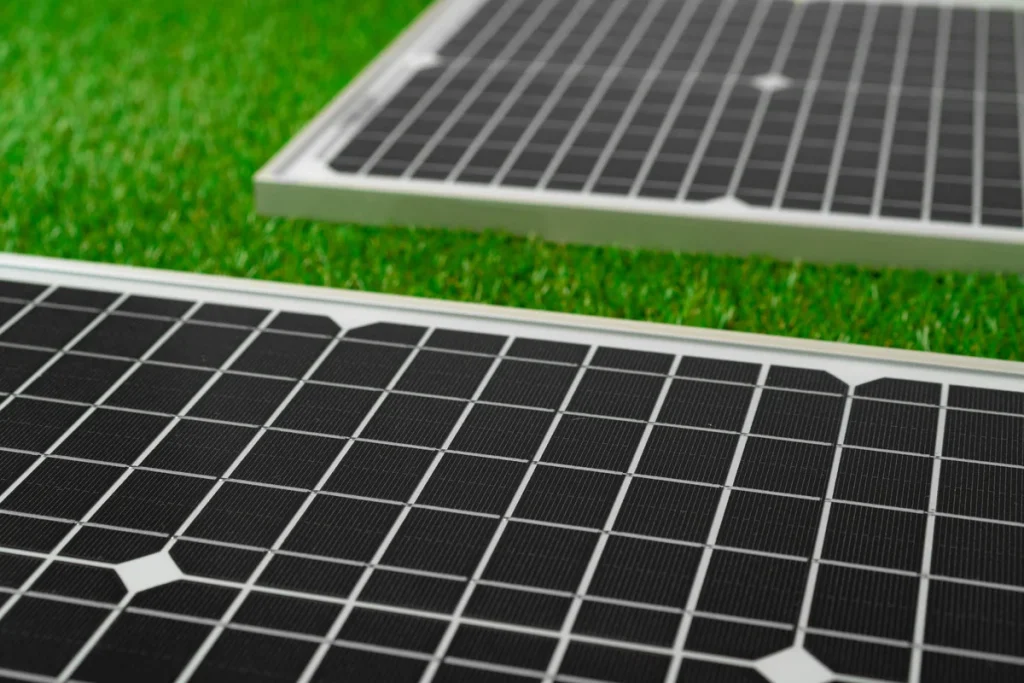
Why do solar panels keep developing? Why does it need to get better and better?
The negative impacts on the environment and other issues associated with fossil fuels have forced many countries to change their environmental policies towards achieving sustainability in the renewable-energy industry. Solar energy in Malaysia has become one of the best sustainable energy sources that will gradually replace the use of fossil fuels for the production of electricity.
Do you know?
Breaking news: did you know that Malaysia’s domestic oil and gas reserves are expected to run out by 2029? The country will be forced to import fossil fuels for electricity generation. However, the prices of imported fossil fuels are heavily dependent on exchange-rate fluctuations, which will potentially expose Malaysia to economic risk. Moreover, the widespread use of renewable energy is essential for Malaysia to address its climate change challenges. For example, between 1971 and 2020, the country’s carbon dioxide emissions increased at an annual rate from 14.7 to 262.2 million metric tonnes! Among the available renewable energy sources, solar energy in Malaysia has the greatest potential, as the country is located within the sunbelt with at least ten hours of sun every day. This allows solar power to be used to generate electricity all year long across the country.
The History of Solar Energy in Malaysia
Historically, solar PV installation was first introduced in Malaysia via the pioneering solar PV rural electrification programme in 1982. This is where solar energy in Malaysia started. As part of the scheme, solar PV was installed in 100 homes in several remote villages across the country.
In 2000, the country’s largest electricity utility company launched the country’s first grid-connected PV system. This was then followed by a 5-year programme called SURIA 1000 between 2006 and 2010. The programme provided subsidies to successful bidders for the installation of solar PV systems in their homes. Most importantly, SURIA 1000 has also opened up opportunities for the public and industry to be directly involved in solar-related initiatives. Since then, many multinational companies have started to set up PV cell and module manufacturing plants in Malaysia.
In 2011, the renewable-energy feed-in tariff (FiT) mechanism was established under the Renewable Energy Act 2011. The FiT allows the sale of electricity generated from solar PV systems to the utility company at a fixed premium price for a specific time period. The FiT programme came to an end in 2017. It was replaced by net energy metering (NEM), which enables solar users to produce electricity with solar net metering and sell the excess electricity to power grids. Since January 2019, NEM has been improved by introducing the true NEM concept, which enables excess solar energy produced to be exported back to the grid on a “one-on-one” offset basis.
About the policies - Solar Energy in Malaysia
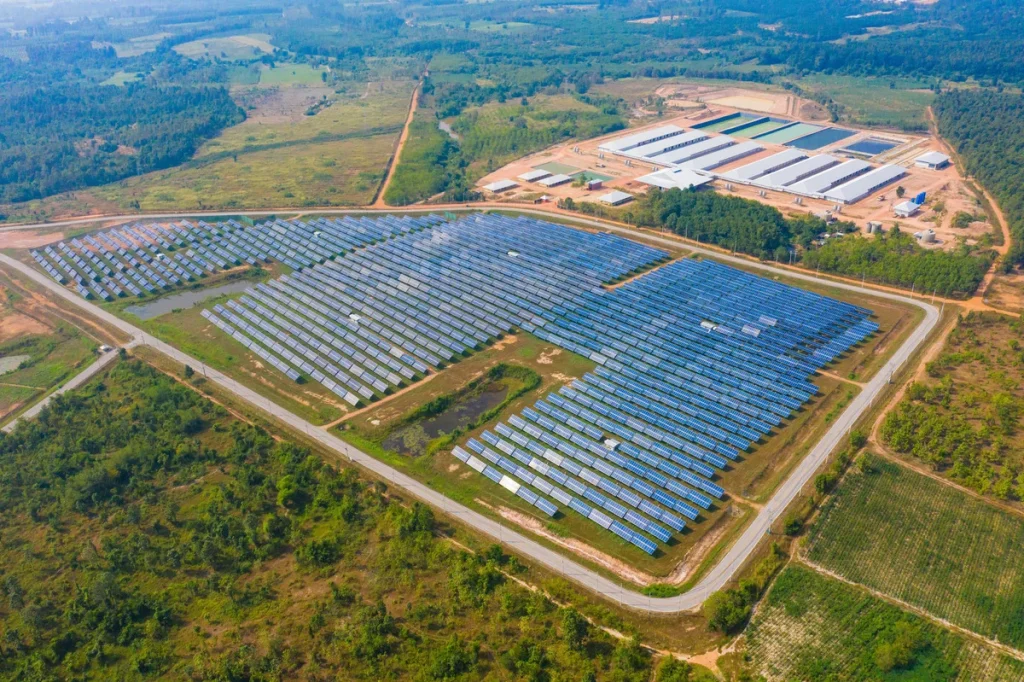
The existing public green policies in Malaysia aim to achieve the national renewable-energy mix target of 20% by 2025. However, despite various incentives and strategies to encourage the growth of the renewable-energy sector, clean energy sources (including solar PV) constitute merely 2% of the total electricity-generation capacity in Malaysia. Specifically, the residential sector contributes merely 9.14 megawatts to the installed capacity of solar PV in Malaysia. Most of the installed PV capacity comes from the commercial (i.e., 25.60 megawatts) and industrial (i.e., 355.76 megawatts) sectors. Thus, increased efforts are required to enhance the adoption of solar PV technologies, particularly among households in Malaysia.
Conclusion
This means all domestic and household individuals need to be fully aware of solar energy in Malaysia and how it could improve the environment. The younger generation will need a better, more comprehensive, and more in-depth education on renewable energy. So, as future decision makers, they will understand the impact of renewable energy, such as solar energy, on climate change and the environment.
So what are you waiting for? We need you to help us make the world a better place, starting with our beloved country, Malaysia!