Blogs

Date: 18/07/2024
Category: Solar Related, Tips and Advice

Solar Return On Investment In Malaysia

The solar return on investment (ROI) in Malaysia can vary depending on several factors, including the location, size, and efficiency of the solar panel system, as well as the cost of electricity in the area. Generally speaking, the solar return on investment in Malaysia can range from 5% to 20%, with an average of around 10%.

It’s worth noting that Malaysia has a good amount of sunlight throughout the year, which can help maximise the energy production of a solar panel system. Additionally, the Malaysian government has implemented various incentives and programmes to encourage the adoption of solar energy, such as the Net Energy Metering (NEM) programme and the Green Investment Tax Allowance (GITA) scheme, which can help improve the financial viability of investing in solar.

Maximizing Your Investment in Solar Power

As we all know, investing in solar power is always a big step. Nevertheless, the solar return on investment (ROI) from your solar panel is one of the biggest reasons why people choose to incorporate solar panels into their homes.

What exactly does it mean to have effective returns on investment if you’re planning to invest in a solar panel system for your home? Well, a good ROI will be a positive net flow of earnings or savings that was generated throughout the life of the solar system you installed.

Typically, commercial and industrial consumers should expect payback in 3–5 years, and residential consumers should expect payback in 5–7 years. It sounds like it will take a long time, but it’s not. Why? Because once the initial cost of your solar system is paid back, the energy generated by it is almost free!

The Reason for the High Initial Cost of Solar Panels

If you’ve ever wondered why the initial cost of solar panels can be relatively high, here are several reasons:

Cost of Materials 

The materials used to manufacture solar panels can be expensive, particularly high-quality silicon, which is a key component in most solar cells. Additionally, the manufacturing process itself can be complex and require specialised equipment and expertise, which can further drive up costs.

Research & Development 

Solar panel technology has improved significantly in recent years, and manufacturers are continually investing in research and development to create more efficient and reliable panels. This ongoing innovation requires significant investment, which is reflected in the cost of the panels.

Installation & Maintenance

In addition, there are other expenses associated with solar panel installations, including the cost of installation, wiring, and electrical equipment. Ongoing maintenance and repairs can also add to the overall cost of solar panels.

Despite the initial cost, it’s worth noting that solar panels can provide significant long-term savings on energy bills, and many governments and organisations offer incentives and subsidies to encourage the use of solar power. And did you know that advances in technology and manufacturing processes have helped to bring the cost of solar panels down in recent years, making them a more affordable option for many homeowners and businesses? Well, it is true, and we can expect it to further improve shortly!

How to Ensure Your System Reaches a Positive ROI

There are several things you can do to ensure a positive solar return on investment:

Choose High-quality Components

Invest in high-quality solar panels, inverters, and mounting systems to ensure that your system is reliable and efficient. While the initial cost may be higher, high-quality components are likely to last longer and perform better, ultimately providing a better solar return on investment.

Size your System Appropriately

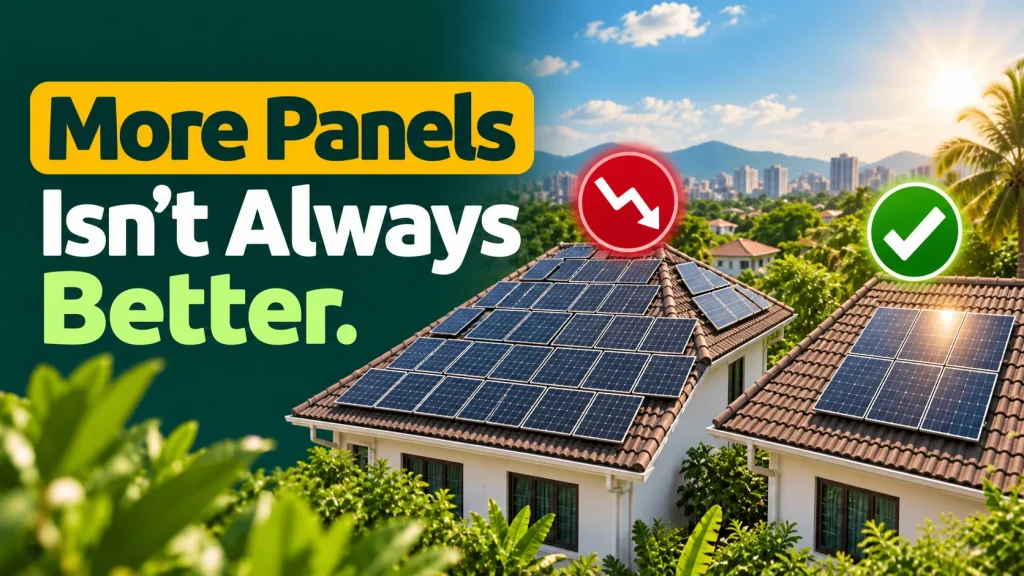
Work with a qualified solar installer to determine the right size for your system based on your energy usage and available space. Oversizing or undersizing your system can impact its efficiency and solar return on investment.

Maximise Energy Production

Make sure your solar panels are installed in a location with good sun exposure, free from the shade, and at the optimal angle for your location. Keep the panels clean and free from debris to maximise energy production.

Monitor your Energy Usage

Monitor your energy usage to ensure that your solar panel system is producing enough energy to meet your needs. Make adjustments as needed to optimise your energy usage and ensure that you are not wasting it.

Take Advantage of the Incentive

Look into local and state incentives for solar panel installations, such as tax credits, rebates, and net metering programmes. These incentives can help reduce the upfront cost of your system and improve its overall solar return on investment.

Consider Energy Storage

Adding a battery storage system to your solar panel installation can help you store excess energy produced during the day for use at night, maximising your energy savings and improving your solar return on investment.

Overall, maximising the efficiency and effectiveness of your solar panel system and taking advantage of incentives can help ensure a positive solar return on investment. Working with a qualified installer and monitoring your energy usage can help you optimise your system and maximise your savings. So, for those of you considering going solar, Now is always the best time. If you have questions, you know where to find us. Give us a call at Verdant Solar for a free consultation. We will help you get a better understanding of what you need. Like always, we provide only the best for our dear customers. So, what are you waiting for?

Share on:

Related Posts

11/09/2026

|

Blogs
How Does Solar Save Money in Malaysia?

How Does Solar Save Money in Malaysia? How self-consumption, TNB bill savings and Solar ATAP

10/09/2026

|

Blogs
Guide To Solar ATAP Malaysia [Sep 2026]

Solar ATAP Malaysia: Eligibility, Capacity Limits & How It Works The current 2026 guide for

09/09/2026

|

Blogs
What Solar System Size Do I Need In Malaysia?

What Solar System Size Do I Need in Malaysia? How electricity usage, roof space, shading

08/09/2026

|

Blogs
Is Solar Right for Your Home in Malaysia?

Is Solar Right for Your Home in Malaysia? Who benefits most, who should think twice

Join our team as a Senior Finance Executive to manage end-to-end accounting operations, financial reporting, and tax compliance. In this role, you will execute full-set journal postings, balance sheet reconciliations, and fixed asset tracking while supporting audit requirements.


We are looking for someone proficient in ERP systems (such as Odoo) who is eager to utilize AI tools to automate routine tasks and enhance overall accounting efficiency.


Key Responsibilities:

  • Day-to-Day Accounting: Record daily financial transactions, prepare journal entries, and maintain the general ledger system (FULL SET).
  • Month-End & Year-End Close: Execute month-end and year-end closing activities, including accruals, prepayments, and intercompany transactions within strict deadlines.
  • Balance Sheet Reconciliations: Prepare and review monthly balance sheet schedules and bank reconciliations to ensure accuracy and resolve variances promptly.
  • Fixed Assets Management: Maintain the fixed asset register, including recording additions, disposals, transfers, and calculating monthly depreciation.
  • Financial Reporting: Assist in preparing financial statements (Balance Sheet, Profit & Loss), management reports, and variance analysis.
  • Audit & Compliance: Support internal and external audit processes by preparing required schedules, documentation, and addressing auditor queries.
  • Tax Support: Assist with tax filing requirements, including SST, corporate tax schedules, and withholding tax compliance as applicable.
  • Cross-Function Support: Support AR and AP tasks as and when required.
  • AI & Automation: Leverage AI tools to simplify day-to-day tasks and automate accounting routines where applicable.


Requirements:

  • Bachelor’s Degree in Accounting, Finance, or a related field; ACCA/CPA qualification is highly advantageous.
  • At least 5 years of finance experience, including a minimum of 3 years specializing in GL account closing.
  • Proven track record of participating in or leading accounting system migrations, balance sheet reconstructions, and legacy data verification.
  • Hands-on experience with Odoo (or closely equivalent modular ERPs) and advanced Microsoft Excel skills are mandatory.
  • Strong grasp of end-to-end accounting, bookkeeping, and financial principles.
  • Exceptional attention to detail, strong time management, and the ability to work independently and prioritize tasks effectively.